Members of the Computational Algebra Group
Current Members
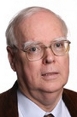 John Cannon, Ph.D. (Sydney), [1971–]. Professor John Cannon is the head of the Computational Algebra Group and the driving force behind the creation and continued development of the Magma computer algebra system. For more than fifty years John has been responsible for the development of new mathematical algorithms, and, crucially, for their implementation in computer software, which enabled their use to become widespread.
The early fruit of John's endeavours was the computer system Cayley, which became an important tool in computational group theory for mathematicians around the world. Later, convinced of the importance of a tool with a wider mathematical range, he established the Computational Algebra Group and launched the development of the much larger project that became the Magma computer algebra system.
John's research interests include: computational methods in group theory, algebra, geometry, number theory, and combinatorics; the design of mathematical programming languages; and the integration of databases with computer algebra systems. His contributions to the Magma project include overall concept and planning, language design, specific design for many categories, numerous algorithms (especially in group theory), and general management.
John's pioneering contributions to the advancement of mathematical computing have gained both national and international recognition. Amongst his honours are included the CSIRO medal in 1993, the Clunies Ross Medal in 2001, the 2006 Richard Dimick Jenks Memorial Prize, and his 2022 election as a fellow of the Australian Academy of Science.
 Geoff Bailey, BSc (Hons) (Sydney), [1995–]. Geoff joined the Computational Algebra Group after finishing his Honours degree in Computer Science at the University of Sydney, bringing with him a strong background in both mathematics and computing.
Geoff started his time with Magma implementing algorithms for elliptic curves (particularly the computation of the Mordell–Weil group for elliptic curves defined over the rationals). He has since dealt with a wide variety of components of the system, including more in-depth work on number fields, p-adic and local rings, graphs, and coding theory. In more recent years he has been focused on the Magma system internals, and of particular recent note has been his work on adding asynchronous I/O facilities and object transmission capabilities to Magma, which has laid the foundation for users to perform distributed parallelism.
Geoff is a former IMO medalist for Australia, and for several years was involved in the tutoring and selection of representatives for Australia's teams for both the mathematical and informatics olympiads. In his spare time he enjoys solving puzzle hunts with his friends, and was part of the team that produced the CiSRA and mezzacotta puzzle hunts between 2007 and 2016.
 Allan Steel, Ph.D. (Sydney), [1989–]. Allan has developed many of the fundamental data structures and algorithms in Magma for multiprecision integers, finite fields, matrices and modules, polynomials and Gröbner bases, aggregates, memory management, environmental features, and the package system; he has also worked on the Magma language interpreter. In collaboration, he has developed the code for lattice theory (with Bernd Souvignier), invariant theory (with Gregor Kemper), and module theory (with Jon Carlson and Derek Holt).
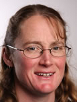 Nicole Sutherland, Ph.D. (Sydney), [1999–]. Nicole joined the Computational Algebra Group after finishing her Honours degree in Mathematics and Computer Science at Macquarie University. She completed her PhD at Sydney in 2014 having investigated algorithms for Galois extensions of global function fields.
Nicole has developed machinery in a number of areas in Algebra and Number Theory. These include algebraic number fields and function fields, modules over Dedekind domains, computations of Galois groups and splitting fields, local fields (including those defined by an arbitrary irreducible polynomial and extensions of series rings), schemes and their subtypes, associative and quaternion algebras, Newton polygons, lazy power series rings, and Hadamard matrices.
Nicole's work in number and function fields has included the generalization of machinery for orders of number fields and function fields. She also reconfigured the quadratic and cyclotomic fields to allow inheritance from the number fields, expanding the functionality of these more specific fields.
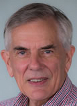 Don Taylor, D.Phil. (Oxford), [2010–]. Don's research interests are in reflection groups, finite group theory, and geometry. He has implemented algorithms for complex reflection groups and complex root data. Don has also contributed to the packages for Chevalley groups and groups of Lie type. He is currently developing algorithms for classical groups of isometries, Clifford algebras, and spin groups.
 Bill Unger, Ph.D. (Sydney), [1998–]. Bill's main area of research interest is computational group theory, with particular emphasis on algorithms for permutation and matrix groups. He has implemented many of the current permutation and matrix group algorithms for Magma; in particular, BSGS verification, solvable radical, chief series, and backtrack search algorithms. Bill has discovered and implemented within Magma powerful new algorithms for computing the character table of a finite group and the Schur indices of characters.
 Mark Watkins, Ph.D. (Athens, Ga), [2003, 2004–2005, 2008–]. Mark works in the area of number theory, particularly analytic methods for arithmetic objects. He has implemented a range of analytic tools for the study of elliptic curves including analytic rank, modular degree, Heegner points, and (general) point searching methods. Mark also deals with conics, lattices, modular forms, and descent machinery over the rationals.
Former Members
Wieb Bosma [1989–1996]: Responsible for the initial development of number theory in Magma and the coordination of work on commutative rings. Also has continuing involvement with the design of Magma.
Gavin Brown [1998–2001]: Developed code in basic algebraic geometry, applications of Gröbner bases, number field and function field kernel operations; applications of Hilbert series to lists of varieties.
Herbert Brückner [1998–1999]: Developed code for constructing the ordinary irreducible representations of a finite soluble group and the maximal finite soluble quotient of a finitely presented group.
Nils Bruin [2002–2003]: Contributions include Selmer groups of elliptic curves and hyperelliptic Jacobians over arbitrary number fields, local solubility testing for arbitrary projective varieties and curves, Chabauty-type computations on Weil-restrictions of elliptic curves and some algorithms for, and partial design of, the differential rings module.
Bruce Cox [1990–1998]: A member of the team that worked on the design of the Magma language. Responsible for implementing much of the first generation Magma machinery for permutation and matrix groups.
Brendan Creutz [2011–2013]: Primary research interests are in arithmetic geometry. Main contributions focus on descent obstructions to the existence of rational points on curves and torsors under their Jacobians.
Steve Donnelly, Ph.D. (Athens, Ga) [2005–2017]: Research interests are in arithmetic geometry, particularly elliptic curves and modular forms. Contributions include: many routines for elliptic curves over ℚ and number fields, including descent methods, Cassels–Tate pairings and integral points; Hilbert modular forms and fast algorithms for definite quaternion algebras; also developed a new implementation of the general class group algorithm. Currently continuing to work on class groups, elliptic curves and surfaces.
Andreas-Stephan Elsenhans [2012–2015]: Main research interests are in the areas of arithmetic and algebraic geometry, particularly cubic and K3 surfaces. Main contributions focus on cubic surfaces from the arithmetic and algebraic points of view.
Claus Fieker [2000–2011]: Formerly a member of the KANT project. Research interests are in constructive algebraic number theory and, especially, relative extensions and computational class field theory. Main contributions are the development of explicit algorithmic class field theory in the case of both number and function fields and the computation of Galois groups.
Damien Fisher [2002–2006]: Implemented a package for p-adic rings and their extensions and undertook a number of extensions to the Magma language.
Alexandra Flynn [1995–1998]: Incorporated various Pari modules into Magma, and developed much of the machinery for designs and finite planes.
Volker Gebhardt [1999–2003]: Author of the Magma categories for infinite polycyclic groups and for braid groups. Other contributions include machinery for general finitely presented groups.
Katharina Geiß ler [1999–2001]: Developed the code for computing Galois groups of number fields and function fields.
Willem de Graaf [2004–2005]: Contributed functions for computing with finite-dimensional Lie algebras, finitely-presented Lie algebras, universal enveloping algebras and quantum groups.
Sergei Haller [2004, 2006–2007]: Developed code for many aspects of Lie Theory. Of particular note was his work on the construction of twisted groups of Lie type and the determination of conjugacy classes of elements in the classical groups (jointly with Scott Murray (Magma)).
Michael Harrison, Ph.D. (Cambridge) [2003–2015, 2018–2020]: Implemented p-adic methods for counting points on hyperelliptic curves and their Jacobians over finite fields. Added a variety of general algebraic curve functionality including gonal maps and modular form functionality including the small modular curve database. Developed machinery for general surfaces, for the cohomology of projective varieties and worked on further surface machinery and a semi-stable reduction algorithm for curves.
Emanuel Herrmann [1999]: Contributed code for finding S-integral points on genus 1 curves (not elliptic curves).
Florian Heß [1999–2001]: Developed a substantial part of the algebraic function field module in Magma including algorithms for the computation of Riemann–Roch spaces and class groups. His most recent contribution (2005) is a package for computing all isomorphisms between a pair of function fields.
David Howden, Ph.D. (Warwick) [2012–2014]: Worked on improved methods for constructing automorphism groups and testing isomorphism in the case of soluble groups.
Alexander Kasprzyk [2009–2010]: Developed the toric geometry and polyhedra packages (along with Gavin Brown and Jaroslaw Buczynski).
David Kohel [1999–2002]: Contributions include a model for schemes (with Gavin Brown); algorithms for curves of low genus; implementation of elliptic curves, binary quadratic forms, quaternion algebras, Brandt modules, spinor genera and genera of lattices, modular curves, conics with Paulette Lieby), modules of supersingular points (with William Stein), Witt rings.
Paulette Lieby [1999–2003]: Contributed to the development of algorithms for algebraic geometry, abelian groups and incidence structures. Developed data structures for multigraphs and implemented algorithms for planarity, triconnectivity and network flows.
Graham Matthews [1989–1993]: Involved in the design of the Magma semantics, user interface, and internal organisation.
Scott Murray [2001–2002, 2004–2010]: Implemented algorithms for element operations in split groups of Lie type, representations of split groups of Lie type, split Cartan subalgebras of modular Lie algebras, and Lang's Theorem in finite reductive groups. More recently implemented solutions to conjugacy problems in the classical groups (with Sergei Haller and Don Taylor).
Catherine Playoust [1989–1996]: Wrote extensive documentation and implemented an early help system. Contributed to system-wide consistency of design and functionality. Also pioneered the use of Magma for teaching undergraduates.
Richard Rannard [1997–1998]: Contributed to the code for elliptic curves over finite fields including a first version of the SEA algorithm.
Colva M. Roney-Dougal [2001–2003]: Completed the classification of primitive permutation groups up to degree 999 (with Bill Unger). Also undertook a constructive classification of the maximal subgroups of the classical simple groups.
Dan Roozemond [2010–2012]: Research focused on the computational aspects of Lie theory. Ported algorithms for the weight multisets from LiE to Magma and developed a number of algorithms for reductive Lie algebras, particularly over fields of small characteristic.
Michael Slattery [1987–2006]: Contributed a large part of the machinery for finite soluble groups including subgroup lattice and automorphism group.
Ben Smith [2000–2003]: Contributed to an implementation of the Number Field Sieve and a package for integer linear programming.
Bernd Souvignier [1996–1997]: Contributed to the development of algorithms and code for lattices, local fields, finite dimensional algebras and permutation groups.
Damien Stehlé [2006, 2008–2010]: Implemented the provably correct floating-point LLL algorithm together with a number of fast non-rigorous variants. Also developed a fast method for enumerating short vectors.
John Voight [2005–2006]: Implemented algorithms for quaternion algebras over number fields, associative orders (with Nicole Sutherland), and Shimura curves.
Alexa van der Waall [2003]: Implemented the module for differential Galois theory.
Paul B. van Wamelen [2002–2003]: Implemented analytic Jacobians of hyperelliptic curves in Magma.
Greg White [2000–2006]: Contributions include fast minimum weight determination, linear codes over ℤ/mℤ, additive codes, LDPC codes, quantum error-correcting codes, and a database of best known linear codes (with John Cannon and Markus Grassl). He also implemented a module for Young tableaux.